

AquaPhyLit Program
Move smart. Stay safe. Be Water.
Why Blue Spaces Matter
Blue spaces are key for integral human development — they offer opportunities for discovery, learning, challenge, and connection with nature.
Learning how to engage with aquatic environments in a safe, conscious, and respectful way does not happen spontaneously. It requires education, guided experience, and meaningful opportunities.
The AquaPhyLit Vision
AquaPhyLit emerges from this vision, placing science, humanism, safety, and sustainability at the service of young people’s holistic development.
By promoting aquatic physical literacy, the project supports students in moving with competence, making responsible decisions, and developing positive, lifelong relationships with aquatic environments.
What Is AquaPhyLit?
AquaPhyLit — Aquatic Physical Literacy is a school-based educational program that promotes the development of aquatic physical literacy through safe, pedagogically oriented, and meaningful participation in blue physical activities and sports.
The program integrates physical activity, sport, aquatic safety, risk prevention, health education, and sustainability.
Integrated Educational Approach
The program supports children and young people in developing the ability to build positive and safe relationships with blue spaces.
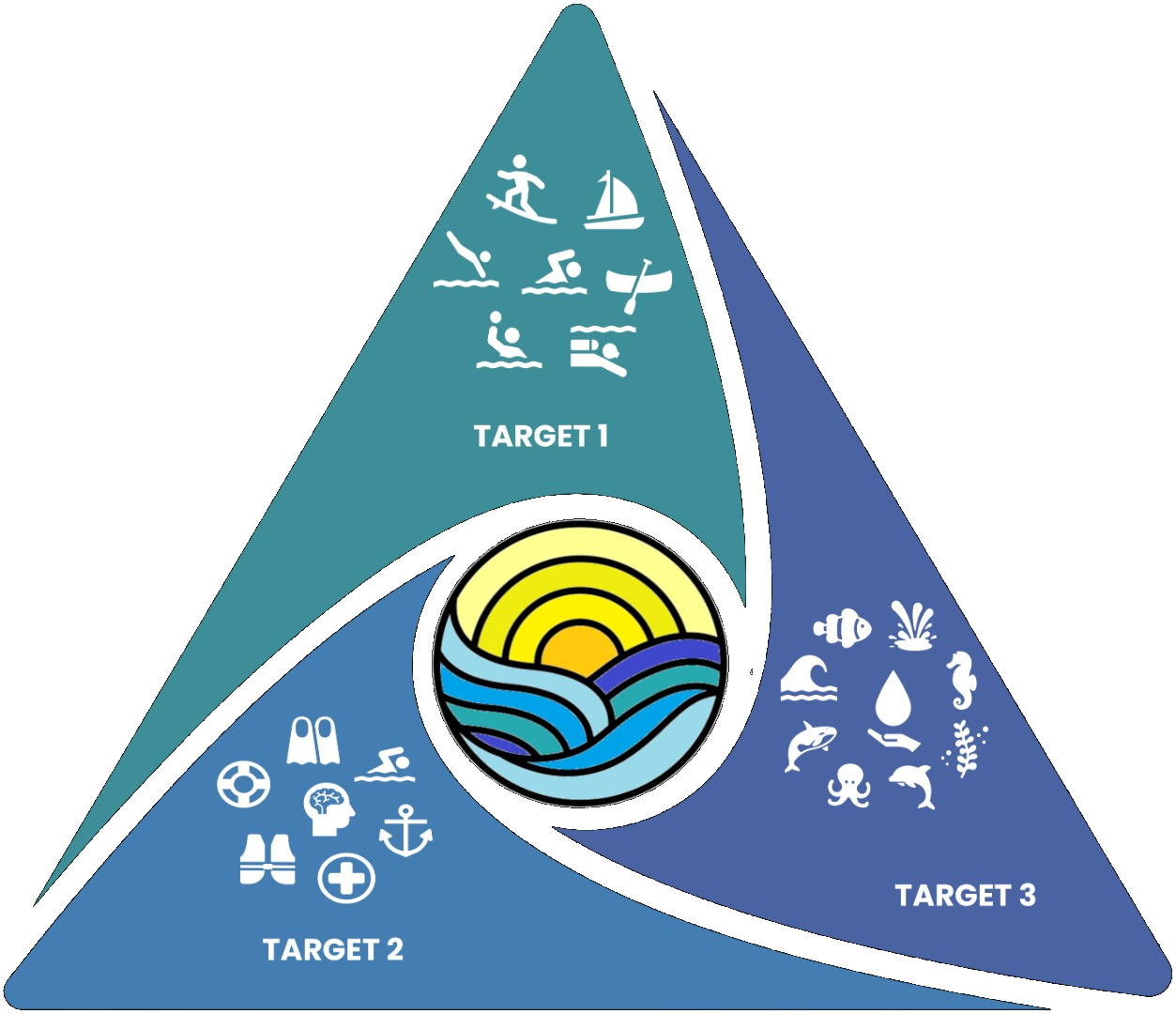
AquaPhyLit integrates three complementary development areas that together form a holistic educational framework.
Targets
Target 1 – Healthy Citizenship & Active Lifestyle
Aquatic Physical Literacy development through Blue Physical Activity for Life.
This target focuses on developing movement competence, confidence, and motivation to participate in aquatic physical activity across the lifespan, supporting physical, mental, and social well-being.
Target 2 – Aquatic Safety & Accident Prevention
Commitment to individual and collective safety during Blue Physical Activities.
This area emphasizes risk awareness, prevention strategies, and responsible decision-making to reduce accidents and promote safe participation in aquatic environments.
Target 3 – Health of Blue Spaces
Commitment to the preservation of blue spaces during Blue Physical Activity.
Participants develop environmental awareness and responsibility, learning how to engage in aquatic activities while respecting, protecting, and sustaining blue ecosystems.
Purpose
To educate competent, knowledgeable, and motivated citizens who pursue the development of their individual potential and actively contribute to their community by recognizing their role and responsibilities for…
… for their meaningful, culturally relevant, and sustained participation in Blue Physical Activities across the lifespan, while supporting others in their own journey.
…for their individual safety when interacting with diverse blue spaces through movement and physical activity, while encouraging and safeguarding others.
… for their sensitive, conscious, and meaningful involvement in preserving Blue Spaces during physical activity, while encouraging others to take on these responsibilities.
General Objectives
- To support the lifelong development of aquatic physical literacy.
- To support the development of safety behaviours, prevention strategies, and emergency response skills in aquatic environments.
- To raise awareness of ethical and environmental responsibility in interactions with blue spaces.
- To encourage active, healthy, and socially responsible lifestyles.
- To strengthen the role of schools and Physical Education teachers in delivering equitable, high-quality aquatic education.
- To contribute to the development of competent, aware, and socially responsible citizens.
- To support the development of a critical and emancipatory awareness of Blue Physical Activity practice.
AquaPhyLit: a School Sport piloting project to promote aquatic physical literacy, safety, and sustainability
Pilot Project Overview
AquaPhyLit, as a pilot project, aims to develop, implement, evaluate, and refine a pedagogical model for aquatic education applicable to the school context. The project seeks to contribute to the development of evidence-informed pedagogical practices aligned with current scientific knowledge on lifelong physical activity promotion, drowning prevention, and fostering a sustainable relationship with blue spaces.
Intervention Details
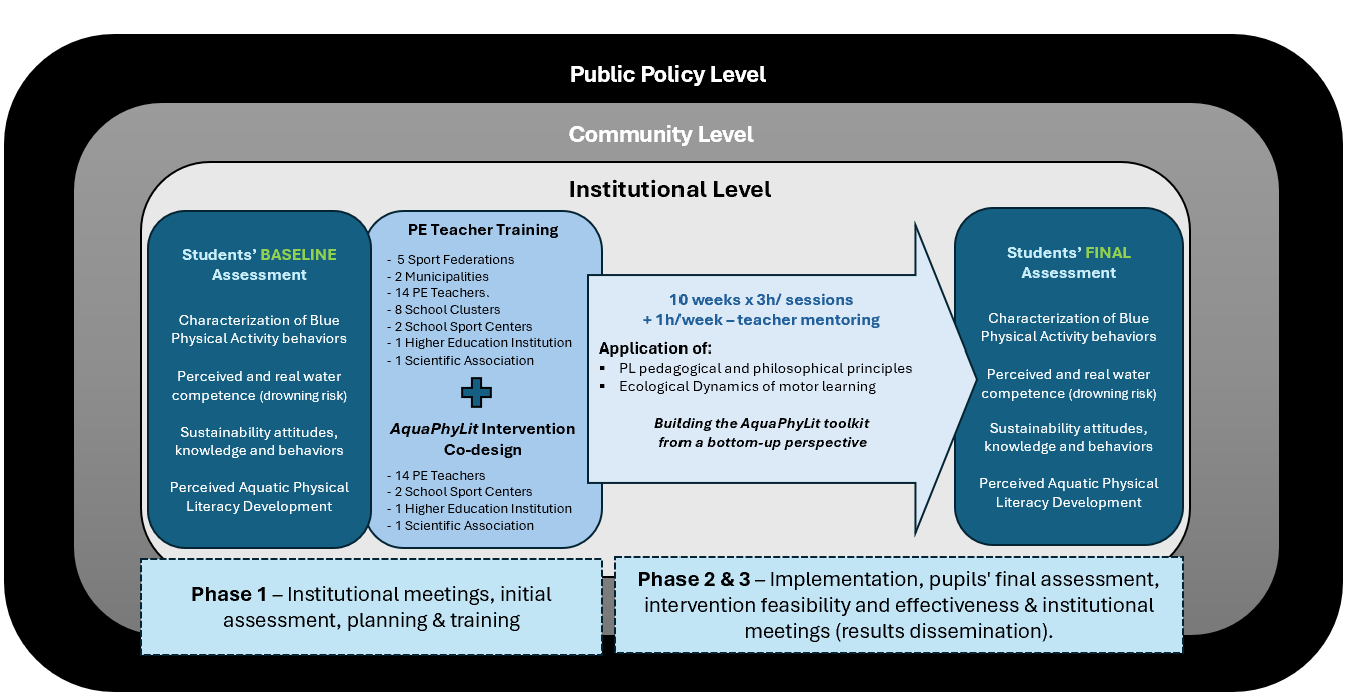
The pilot intervention will take place during the 2025/2026 academic year, over a 10-week period, involving approximately 120 students aged 12 to 18.
The intervention includes:
Continuous professional development for teachers:
30 hours of contact time + 50 hours of autonomous work, with a strong practical component valuing teachers as key agents of change.School Sport training sessions:
Access to different aquatic environments with diverse activities, including sport lifesaving, underwater activities, open-water swimming, sailing, canoeing, stand-up paddleboarding, surfing, bodyboarding, and bodysurfing.Integration of aquatic safety:
Prevention, risk management, and rescue content in alignment with School Sport safety guidelines.Education for active citizenship and sustainability:
Promoting respect for and preservation of blue spaces.
Theoretical Framework
The project is grounded in an ecological model of physical activity promotion (Sallis et al., 2015), integrating the pedagogical principles of physical literacy (Whitehead, 2019; Keegan et al., 2019; Carolo et al., 2024) and the ecological dynamics of motor learning (Button et al., 2021) at the intrapersonal level. This framework supports meaningful, contextualized, and learner-adapted learning experiences.
Collaboration and Co-Creation
In line with ecological models, collaboration at the organizational and community levels is emphasized. AquaPhyLit operates under a co-creation model with teachers, schools, and institutional partners (municipalities and sports federations).
Contribution to the Educational Mission of School Sport
AquaPhyLit strengthens the mission of School Sport as a vehicle for:
Holistic student development, in alignment with the Profile of Students at the End of Compulsory Schooling;
Promotion of inclusion, equity, and equal opportunities in access to sports participation;
Development of competencies for safe, autonomous, and responsible lifelong participation.
As such, this project represents a relevant pedagogical experience, contributing to reflection on innovative approaches to aquatic education in school contexts, while valuing the role of teachers and CFDDEs in building a school environment that promotes health, safety, and sustainable citizenship.
The results of the pilot implementation will be shared with institutional partners at the end of the intervention and are expected to contribute meaningfully to the improvement of educational and sport practices in school settings.